GRID inverter
NEXT GENERATION OF motor on-board inverter

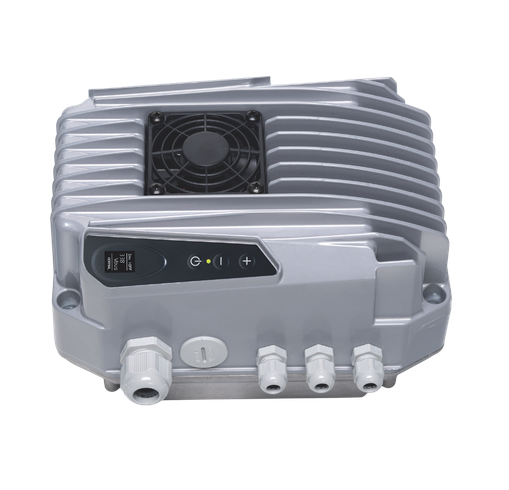
Mida is a user-friendly VFD designed for smaller to mid-range grid-powered pump systems. Ideal for residential and light commercial use, it ensures soft starts, energy savings, and pump protection, all in a compact footprint.
Product Features

-
Motor on-board installation
With MIDA inverters is possible to realise booster sets with one or more pumps (up to 8) to be controlled at constant pressure.
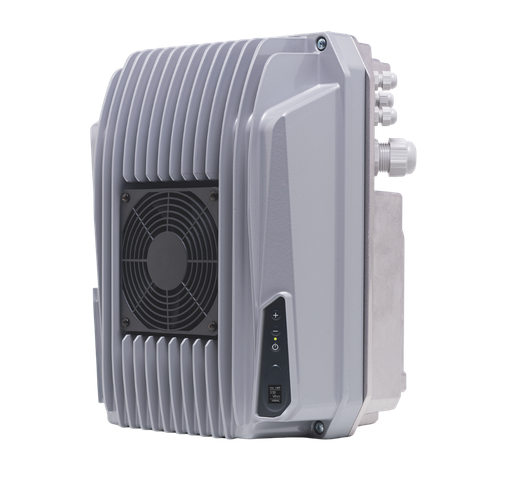
MIDA can be mounted directly to the motor fan cover with a proper kit; the extreme strength of the connection allows the MIDA installation even on horizontal pumps. Screen display can be easily rotated to optimise the parameters view.
Motor mounting application guarantees, as well as the compactness and the saving of additional control panels and wirings, a very good cooling of the inverter and low electromagnetic emissions due to the reduced length of motor cable. IP55 protection allows the installation in humid and dusty environments.
If MIDA cannot be installed on motor fan cover, it is possible to fix the MIDA to the wall with an optional kit composed by a cooling fan fed by the MIDA itself and a wall metal bracket.
IP55 protection does not require to include MIDA drive into any additional control box so MIDA can be installed very near to the pump.
COMBO mode control allows to switch the start of pumps based on real working time and, in case of failure, remaining pumps grant the operation to always guarantee the service.
Once the damaged unit is replaced, COMBO will preferably move the operation on the new pumps to equalize the running time.
2 to 8 MIDAs in COMBO mode
A second way of splitting (named COMBO) consists of using several pumps in parallel (up to 8) each one driven by a MIDA unit. In this way, the efficiency and the reliability of the pump group is maximized.
Each MIDA controls and protects its pump and the operation is shared among all the connected pumps to average pump wearing; in case of failure the remaining pumps will maintain the pumping operation.

-
HVAC systems with circulating pumps
MIDA performs the operation at constant differential pressure by using a differential pressure sensor or using 2 pressure sensors installed in the suction and delivery sides of the pump. Difference value is calculated by the MIDA itself from the two read values.

-
Submersible pumps of various powers can be powered by MIDA. It is suggested to set to 2.5 kHz the carrier frequency (PWM parameter) and sometimes it is necessary to install a filter between pump and inverter to:
reduce the spikes on the motor windings caused by voltage reflection (dv/dt filters)
avoid electromagnetic noise in the surrounding environment (sinusoidal filters).
It is recommended to keep separate the motor cable from other cables granting a certain distance. Nastec can provide filters and shielded cables for a proper pump installation.

-
Constant pressure
MIDA controls the pump speed to maintain constant pressure at a set point independent of the water demand in the system.
Several control modes
Constant pressure
MIDA controls the pump speed to maintain constant pressure at a set point independent of the water demand in the system.
Constant differential pressure
MIDA performs the operation at constant differential pressure by using a differential pressure sensor or using 2 pressure sensors installed in the suction and delivery sides of the pump. Difference value is calculated by the MIDA itself from the two values read.
Constant pressure: 2 set-points
By selecting the constant pressure 2 values control mode, in irrigation systems, only one pump can serve two zones with different pressure sets. It is possible to switch the two values by acting on a digit input contact.
Constant temperature
The control method at constant temperature is used to maintain the temperature of the pumped fluid to vary the thermal load. This control system is used in air conditioning or refrigeration and cooling towers. In this latter case, for example, the temperature measured by a sensor in the return water is kept constant.
Constant flow
By selecting the constant flow control mode and using a flow transducer , it is possible to control the flow of the pumped liquid to vary the system condition. This control mode is used, for example, in a system for filtering the pumped fluid in which the obstruction of the filter would lead to a progressive reduction of the flow rate if it is not compensated by an increasing of the pump speed.
External frequency
In some application, it is chosen to change the frequency of the pump by using an external signal coming from a trimmer or a PLC. In this case, after selecting the External Frequency control mode, it is enough to connect an input signal 4-20 mA or 0-10V, proportional to the desired frequency, to the AN4 analogue contact.

-
Intelligent stop of pump at no flow condition
Below minimum control frequency, MIDA gradually reduces the pump speed while monitoring the pressure transducer signal. If this value is maintained close to the set pressure, MIDA will reduce the output frequency until stopping the pump definitely.
Dry running alarm via cosphi value
If the pump runs dry, its cosphi value drops below a settable cosphi value, and MIDA stops the pump after 3 seconds. MIDA will try to make 5 attempts every 10, 20, 40, 80 and 160 minutes, after which it will trigger an alarm and stop the pump if the condition persists.
Maximum and minimum alarm pressure
When the pressure rises above a certain settable pressure value, MIDA will stop the pump to prevent damage to the hydraulic components in the system. Similarly, if the pressure drops below a certain pressure an alarm is triggered and the pump is stopped.
Smart control of hydraulic parameters
Intelligent stop of pump at no flow condition
Below minimum control frequency, MIDA gradually reduces the pump speed while monitoring the pressure transducer signal. If this value is maintained close to the set pressure, MIDA will reduce the output frequency until stopping the pump definitely.
Dry running alarm via cosphi value
If the pump runs dry, its cosphi value drops below a settable cosphi value, and MIDA stops the pump after 3 seconds. MIDA will try to make 5 attempts every 10, 20, 40, 80 and 160 minutes, after which it will trigger an alarm and stop the pump if the condition persists.
Maximum and minimum alarm pressure
When the pressure rises above a certain settable pressure value, MIDA will stop the pump to prevent damage to the hydraulic components in the system. Similarly, if the pressure drops below a certain pressure an alarm is triggered and the pump is stopped.
Loss compensation proportional to the water flow
If the pressure sensor is placed near the pump, with the increase in flow the pressure value at the furthest outlet is lower than the set pressure. It is possible to vary the set pressure in proportion to the frequency to compensate pressure loss in the pipes.
-
Field Oriented Control (FOC) with automatic motor tuning.
Next generation control of asynchronous motors.
Sensorless control of permanent magnet synchronous motors.
Next generation of motor on-board inverter.
Ideal for water booster sets, HVAC systems with circulating pumps and control of submersible pumps. It ensures:
Energy saving due to variable speed control.
Soft start and soft stop.
Extended system life and reliability.
Installation on humid and dusty environments made possible by IP66 (NEMA 4X) protection degree.
Simplified installation on motor or wall.
Easy and fast commissioning thanks to initial configuration wizard.
High thermal and mechanical performance thanks to aluminium case and independent ventilation.
Technical Specifications
| Model | Vin ± 15% VAC |
Max V out VAC |
Max I in A |
Max I out A |
P2 motor power * kW |
Size |
|---|---|---|---|---|---|---|
| MIDA 203 | 1 x 230 | 1 x Vin | 4,5 | 6 | 0,37 | 1 |
| 3 x Vin | 3 | 0,55 | ||||
| MIDA 205 | 1 x 230 | 1 x Vin | 7,5 | 10 | 0,75 | 1 |
| 3 x Vin | 5 | 1,1 | ||||
| MIDA 207 | 1 x 230 | 1 x Vin | 11 | 12 | 1,1 | 1 |
| 3 x Vin | 7,5 | 1,5 | ||||
| MIDA 209 | 1 x 230 | 1 x Vin | 14,5 | 13,5 | 1,5 | 2 |
| 3 x Vin | 9,5 | 2,2 | ||||
| MIDA 212 | 1 x 230 | 1 x Vin | 19,5 | 13,5 | 1,5 | 2 |
| 3 x Vin | 12,5 | 3 | ||||
| MIDA 218 | 1 x 230 | 1 x Vin | 32 | 17,5 | 2,2 | 2 |
| 3 x Vin | 18,5 | 4 | ||||
| MIDA 304 | 3 x 230 | 3 x Vin | 3,7 | 4 | 0,75 | 1 |
| MIDA 306 | 3 x 230 | 3 x Vin | 5,4 | 6 | 1,1 | 1 |
| MIDA 309 | 3 x 230 | 3 x Vin | 8 | 9 | 2,2 | 1 |
| MIDA 314 | 3 x 230 | 3 x Vin | 13,5 | 14 | 3 | 2 |
| MIDA 318 | 3 x 230 | 3 x Vin | 17,5 | 18 | 4 | 2 |
| MIDA 325 | 3 x 230 | 3 x Vin | 24 | 25 | 5,5 | 2 |
| MIDA 330 | 3 x 230 | 3 x Vin | 29 | 30 | 7,5 | 2 |
| MIDA 338 | 3 x 230 | 3 x Vin | 36,5 | 38 | 9,3 | 2 |
| MIDA 344 | 3 x 230 | 3 x Vin | 42 | 44 | 11 | 2 |
| MIDA 404 | 3 x 380 - 460 | 3 x Vin | 3,7 | 4 | 1,1 | 1 |
| MIDA 406 | 3 x 380 - 460 | 3 x Vin | 5,4 | 6 | 2,2 | 1 |
| MIDA 409 | 3 x 380 - 460 | 3 x Vin | 8 | 9 | 4 | 1 |
| MIDA 414 | 3 x 380 - 460 | 3 x Vin | 13,5 | 14 | 5,5 | 2 |
| MIDA 418 | 3 x 380 - 460 | 3 x Vin | 17,5 | 18 | 7,5 | 2 |
| MIDA 425 | 3 x 380 - 460 | 3 x Vin | 24 | 25 | 11 | 2 |
| MIDA 430 | 3 x 380 - 460 | 3 x Vin | 29 | 30 | 15 | 2 |
| MIDA 438 | 3 x 380 - 460 | 3 x Vin | 36,5 | 38 | 18,5 | 2 |
| MIDA 444 | 3 x 380 - 460 | 3 x Vin | 42 | 44 | 22 | 2 |